Heidi Edwards
“This is the worst disease you have never heard of. Time is on none of our sides”
The Gene That Changed Everything
For individuals and families living with a rare disease, having life change dramatically without warning is an all-too-familiar experience. A genetic condition can remain hidden for years before revealing itself unexpectedly, forever changing the course of a family’s future. For Heidi Edwards and her family, that reality has meant confronting difficult questions about genetic testing time and time again.
Watching a loved one gradually become confused, irritable, withdrawn, and forgetful brings an overwhelming sense that something is wrong. For Heidi’s family, these changes were the first signs of an inherited condition caused by a mutation in the CSF1R gene: adult-onset leukodystrophy with axonal spheroids and pigmented glia (ALSP). The diagnosis carried a profound emotional weight for Heidi, who had already experienced the impact of the disease firsthand after her mother, aunt, and uncle had all passed away from what they now know was ALSP. Because ALSP is a rare disease and shares symptoms with more common neurodegenerative disorders, it is often misdiagnosed as Alzheimer’s disease, multiple sclerosis, or Pick’s disease before the correct diagnosis is reached.
ALSP is an autosomal dominant genetic disorder that alters the brains white matter and ultimately cause changes in personality, behavior, motor control, and cognitive function1. After genetic testing revealed that Heidi’s family carries the CSF1R mutation, they learned that each child of an affected parent has a 50% chance of inheriting the condition. It was a conversation Heidi would never forget. Faced with the possibility of a disease with no cure, Heidi advocated for genetic testing, believing that knowing their genetic status could help her family make informed decisions rather than live with uncertainty and the hope that they were not affected.
Watching History Repeat Itself
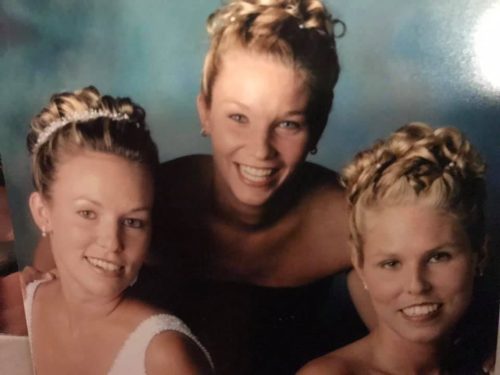
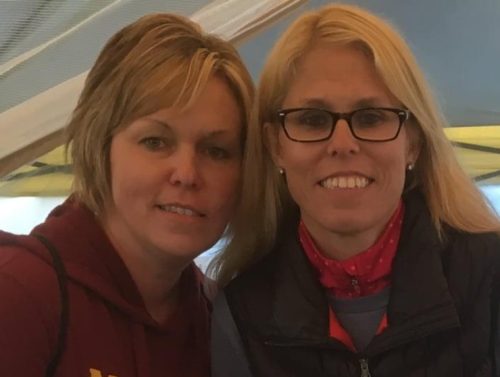
In 2019, Heidi’s twin sister as well as her older sister began showing symptoms of ALSP. Her twin sister, Holly, exhibited noticeable cognitive and behavioral changes, while her older sister, Heather, became increasingly distant. At first, Heidi believed Heather’s withdrawal was simply part of how she was coping with their mother’s death and the burden of the family’s history with ALSP. However, during a conversation with Heather’s daughter, Heidi’s perspective changed completely. Her niece broke down in tears, explaining that Heather’s emotional distance was not merely a response to the disease affecting their family but a symptom of ALSP itself, similar to what she had seen with their other loved ones.
In that moment, Heidi realized history was repeating itself. Both of her sisters were now symptomatic, and the disease that had already taken so much from their family was progressing once again. Around this time, a neurologist at the University of Pennsylvania informed the Edwards family about a bone marrow transplant program at the University of Minnesota that was being used to treat ALSP. Hoping to alter the course of the disease, Heather chose to undergo the transplant, with Heidi serving as her bone marrow donor.
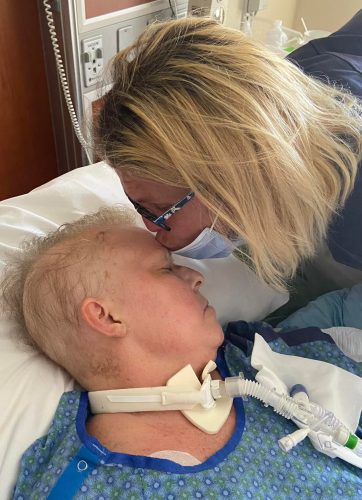
Tragically, just two weeks after the procedure, Heather suffered cardiac arrest and never recovered. She passed away peacefully on August 28th, 2020. Heather’s death profoundly impacted Holly, who was also symptomatic. Holly reconsidered her decision to pursue a bone marrow transplant and instead, chose to spend the remainder of her life surrounded by her family. She passed away peacefully on July 20th, 2021.
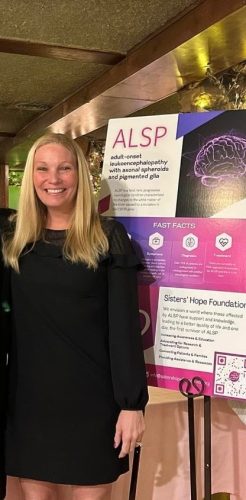
In honor of Holly and Heather, Heidi founded the Sisters’ Hope Foundation. What began as a tribute to her sisters has since grown into a lasting legacy dedicated to their memory and to supporting families affected by ALSP.
When Hope Becomes a Mission
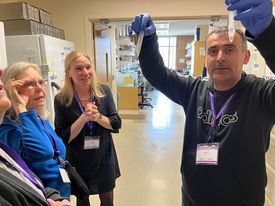
Despite the moments of asking “why me?” and questioning why she and her family have been placed on this difficult journey, Heidi has shared her family’s story with remarkable grace, resilience, and optimism. Through her unwavering commitment to creating meaningful change for the ALSP community and in the face of profound loss, Heidi embodies the true spirit of a Rare Disease Difference Maker®.
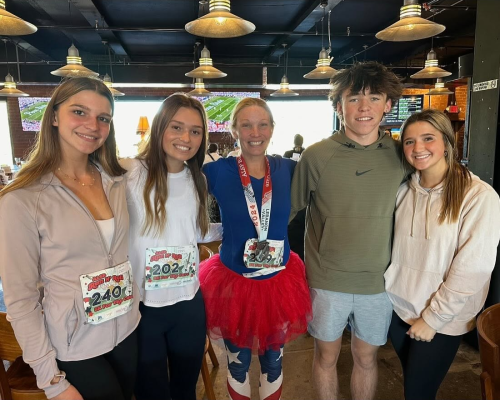
When Heidi first created the foundation, she envisioned it as a way to provide support and connection for families affected by ALSP. Over time, however, that mission grew into something much larger. What began as a support system transformed into advocacy, driven by a commitment to increase access to genetic testing, advance research, and help move clinical trials forward. One of Heidi’s greatest priorities today is educating younger generations about the importance of genetic testing and proactive monitoring. With that mission comes both moments of hope and moments of heartbreak. Recently, Heidi’s nephew tested positive for the CSF1R gene mutation associated with ALSP. At just 24 years old, he has recently graduated college and started his first job after graduation. He represents the first generation in their family able to proactively monitor and address disease progression, including tracking brain lesions, and a bone marrow transplant.
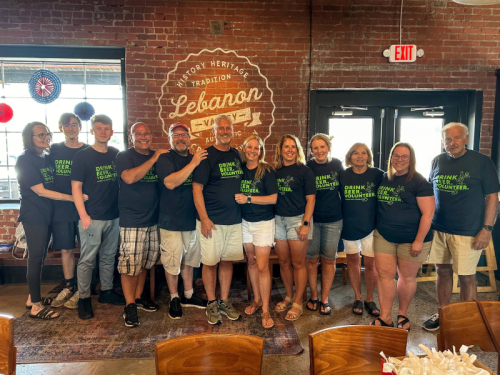
“Find out early, be monitored, weigh your options”.
For Heidi’s other nieces and nephews, her focus is on providing hope, support, and encouragement to get genetic tested for ALSP. She assures her family that if they ever receive a positive diagnosis, they are not alone and that there is a community ready to stand beside them. “We will lose more patients and family members to this disease,” Heidi acknowledges, recognizing the immense emotional weight carried by families affected by neurodegenerative diseases. Her message to caregivers is to cherish the present: “Live in the moment and make memories with your loved ones.” She also emphasizes the importance of extending that same compassion inwards by giving yourself grace throughout the journey.
While Heidi continues to advocate passionately for research and new treatments, she believes the fight against ALSP is about more than scientific progress alone. It is about the people behind the diagnosis including the families, caregivers, and individuals whose lives are forever changed by this disease.
We’re honored to introduce Heidi Edwards as our newest Rare Disease Difference Maker®!
Bibliography
- Sisters’ Hope Foundation. “Symptoms & Causes.” Sisters’ Hope Foundation, https://www.sistershopefoundation.org/symptoms-causes