
Jessica Cella
“You’re one rock making a lot of ripples across the pond.”
When Jessica Cella’s son was diagnosed with primary adrenal insufficiency at eight years old, her life quickly became centered around one question: how do I keep my child alive? Primary adrenal insufficiency, also known as Addisons Disease, is a rare and chronic endocrine disorder where the adrenal glands do not produce enough cortisol, and in many cases aldosterone, hormones essential for helping the body respond to stress, maintain blood pressure, regulate blood sugar, and balance sodium and potassium.
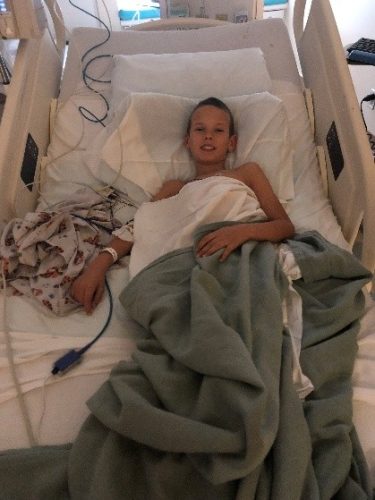
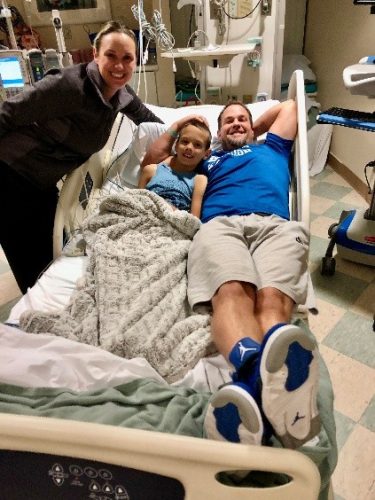
Persons impacted by Addisons Disease experience persistent fatigue, weakness, weight loss, gastrointestinal issues, as well as mood changes and depression1.
One of the most serious risks of Addison’s disease is an adrenal crisis, a medical emergency that can occur when the body’s need for cortisol suddenly exceeds its available supply, often during an illness, infection, injury, surgery, severe physical stress, or when replacement medication is missed or cannot be absorbed. During an adrenal crisis, blood pressure can fall dangerously low, blood sugar and sodium levels may drop, and potassium levels may rise. Patients may experience severe weakness, vomiting, diarrhea, abdominal or back pain, dehydration, confusion, fainting, or loss of consciousness. Without immediate treatment with corticosteroids and intravenous fluids, an adrenal crisis can rapidly progress to shock, organ failure, and death2.
Jess described the first year of her son’s diagnosis as overwhelming as she learned about the disease, how to recognize an adrenal crisis, how to administer emergency medication, and what resources were available to her family. Her son was diagnosed in 2019 after an emergency room visit that began around 6 p.m. one evening and resulted in a diagnosis the following morning. While she was fortunate to live near a children’s hospital with knowledgeable specialists, she quickly learned that many families spend years searching for an accurate diagnosis. Her endocrinologist emphasized the importance of carrying emergency medication and learning how to administer it because emergency responders might not have the medication or ability to treat an adrenal crisis. “I felt like one person in the middle of an island waving a white flag,” Jess recalls. That feeling would eventually
become the motivation for her advocacy.
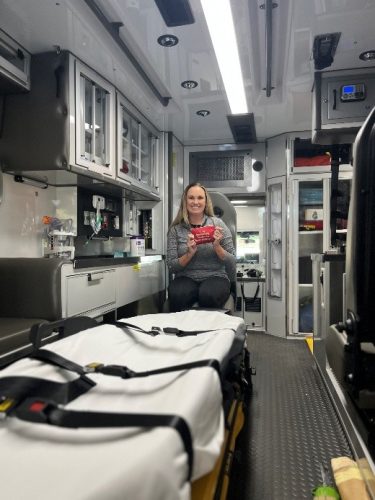
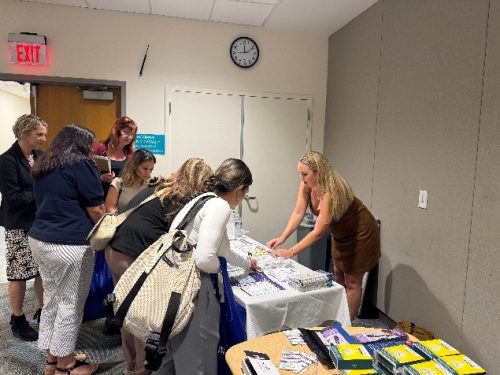
Within a year of the adrenal insufficiency diagnosis, Jess and her family realized that it was time to extend beyond the basic resources they were given. At an adrenal insufficiency conference in South Carolina, she made it a goal to speak with as many patients and families as possible. Through conversations with up to 250 people, she realized that the fear surrounding emergency situations was shared by families across the adrenal insufficiency community. This pervasive fear encouraged Jess to look closer at what happened when other families with a diagnosed loved one called 911 and discovered that emergency response protocols could vary significantly from one system to another. Depending on the county, state, agency, or provider, an EMS team may have different medications available or different protocols for administering them. For someone experiencing an adrenal crisis, those differences can have serious consequences when a patient has an urgent need. “You have to start somewhere, even if it is small,” Jessica said. She began contacting local EMS agencies through their non-emergency lines, arranging meetings, learning about their protocols, and visiting the agencies with adrenal crisis emergency kits to help facilitate education and discussion.

What started with her own community has grown into a much broader effort. Jess has educated more than 1,100 EMS professionals, for patient prescribed prescription medication to be given by paramedics in a city of 3.3 million, and approximately 800 school nurses about adrenal insufficiency and emergency preparedness. She works outside of the traditional rare disease community, recognizing that the people who may ultimately respond to an emergency such as paramedics, EMTs, and school nurses who may not have resources on treating a rare disease such as adrenal insufficiency. She also researches emergency-response practices across the United States, including which systems carry medications needed in an adrenal crisis, and whether state laws allow EMS providers to administer medication carried by a patient. Rather than approaching every conversation simply as a parent or advocate, she focuses on collaboration and finding common ground to implement change.
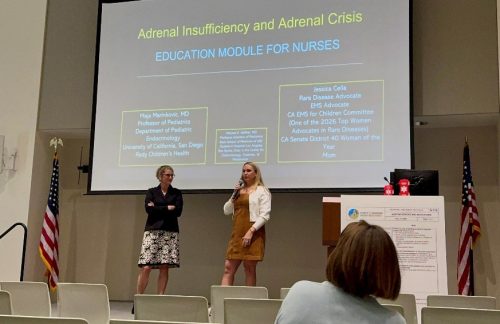
Jessica described the challenges of trying to change emergency protocols as similar to changing a legal system– complex, slow, and dependent on many different people and organizations. Her early efforts to engage larger organizations did not always result in the partnerships she hoped for, so she learned to pivot and find new ways to bring endocrinologists and other stakeholders into the conversation. Limited resources have added another challenge, making it difficult to find funding and support for work that does not always fit neatly into an existing category. Still, Jess continues to think beyond her own son. Her own childhood, growing up with a single mom has shaped the way she views advocacy. She remembers what it felt like to grow up without the resources she needed, and she now considers what children and families in similar circumstances might need, not simply what would benefit her own family.

For Jess, advocacy is ultimately about creating a different experience for the next generation. She hopes her son and other individuals living with adrenal insufficiency will grow up in a world where families do not have to wonder whether the next crisis event will be met with knowledgeable emergency personnel who will know how to respond, and if children will be part of schools and communities who are prepared to support them. Her definition of success is measured by the accumulation of small milestones: a trained school nurse, an informed EMS provider, a prepared family, or one community willing to learn. As Engage Health’s October 2026 Rare Disease Difference Maker® Jess’s message to others is simple; “Start somewhere. Small does not equal failure,” she says. “You’re one rock making a lot of ripples across the pond.”
Who’s made a difference in your rare disease? Whether it’s a teacher, parent, pastor, friend, or physician, if you want to recognize someone who has impacted your life, click here to nominate them!
References
- Johns Hopkins Medicine. “Adrenal Insufficiency (Addison’s Disease).” Johns Hopkins Medicine, https://www.hopkinsmedicine.org/health/conditions-and-diseases/underactive-adrenal-glands–addisons-disease
- National Institute of Diabetes and Digestive and Kidney Diseases. “Definition & Facts of Adrenal Insufficiency & Addison’s Disease.” National Institute of Diabetes and Digestive and Kidney Diseases, https://www.niddk.nih.gov/health-information/endocrine-diseases/adrenal-insufficiency-addisons-disease/definition-facts.